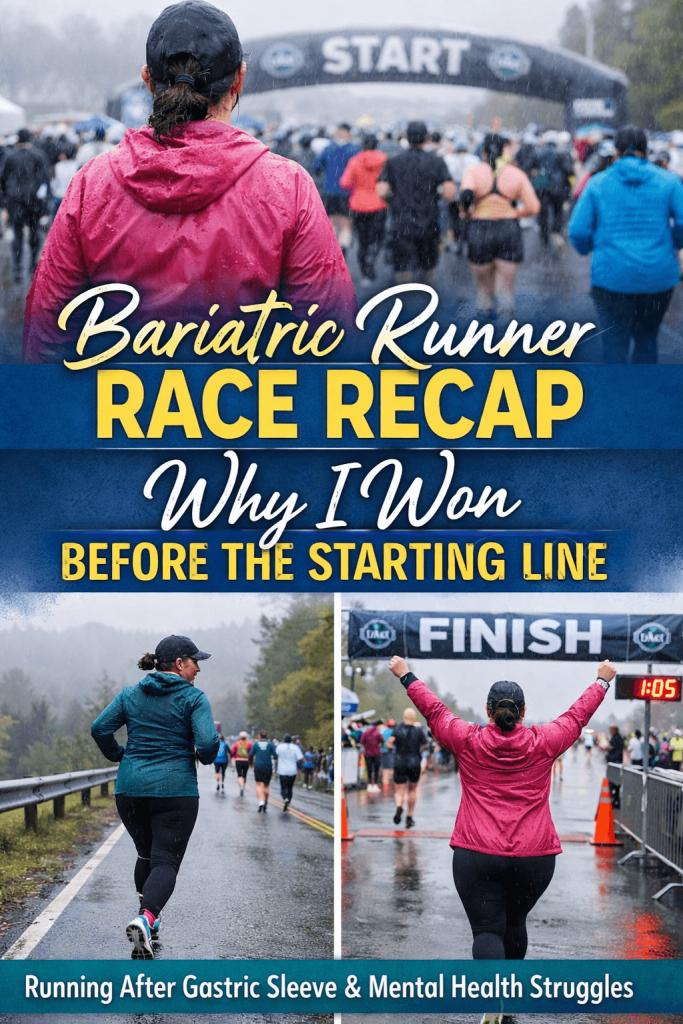

bariatric runner race recap: holiday half by foot traffic | Portland, Oregon
I went into the Foot Traffic Holiday Half race feeling tremendously under-trained. Not in the physical sense—I had done the miles—but in the emotional and mental sense. The kind of under-trained that comes from carrying heavy personal stuff and trying to keep moving anyway.
Still, I got up early. Around 6 a.m. The small mercy of the day was that my wave didn’t start until 8:04, which meant no early morning, brutal alarm. Anyone who’s raced before knows that traffic can make or break your morning, so I headed out toward Swan Island early, fully expecting the usual pile-up of cars.
I was nervous. I was excited. I was unsure.
And I showed up anyway.

IPrefer video? Check out my Foot Traffic Holiday Half race recap on YouTube.

Bariatric Runner Race Recap: December 2025 Holiday Half in Portland, Oregon
Forty-eight hours after the Foot Traffic Holiday Half, when the adrenaline had finally drained and my legs stopped replaying every hill in quiet protest, one truth settled in—slowly, gently, and without drama.
This bariatric runner race recap isn’t about pace or placement. It’s about showing up undertrained, on a hard mental health day, and choosing to stay anyway.
I had already won.
Not because of pace.
Not because of time.
Not because of results.
I won the moment I turned off my car, sat there with my hands on the steering wheel, and said out loud, I’m staying. I will finish this race.
That decision mattered more than anything that happened after.
Leading into this race, I was carrying more than physical fatigue. Mentally, emotionally, personally—I was running on fumes. The kind of exhaustion that doesn’t show up on a training plan but lives in your chest, your breath, the way your shoulders tense without permission.
Standing on that starting line as a bariatric runner took everything I had.
And before splits or finish times even matter, it needs to be said plainly:
Nothing about this race required me to be there.
No one would have questioned it if I’d left.
No one would have blamed me for choosing comfort instead.
But I didn’t.
I stayed.
And that choice counts.
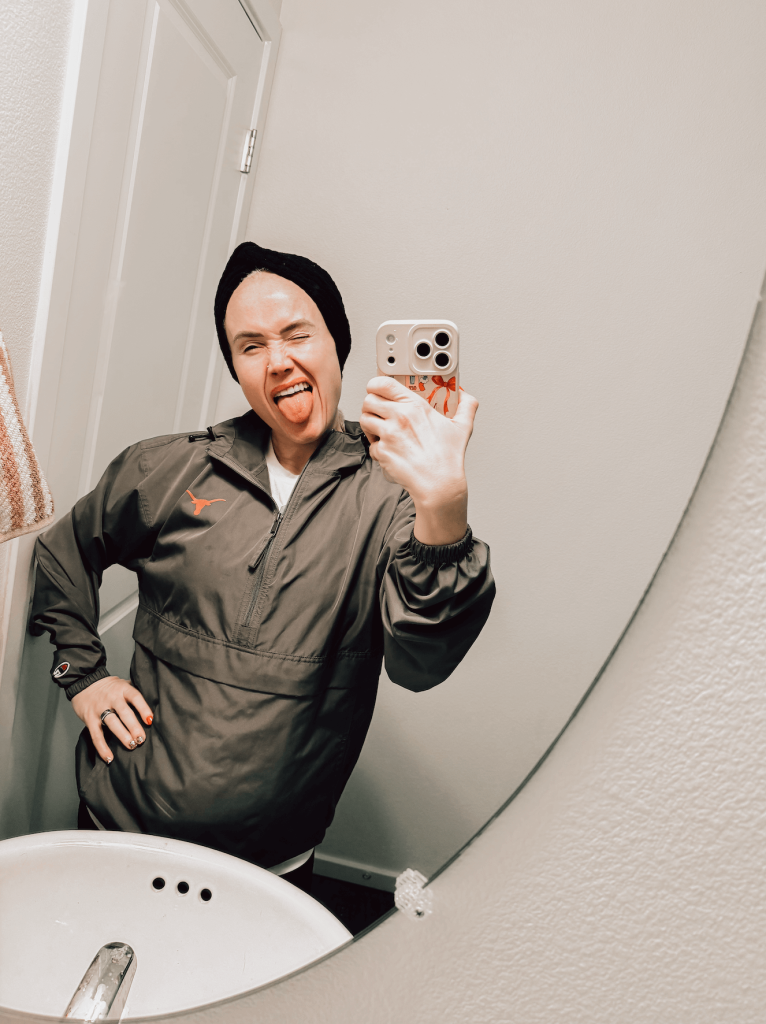
Running After Gastric Sleeve on a Hard Mental Health Day
If you’ve ever raced in Oregon, you already know the atmosphere. Endless gray. Rain that doesn’t fall dramatically—it just exists, soaking everything slowly and completely. I’ve written more honestly about how anxiety and depression affect my training in How Mental Health Impacts My Training, because race day doesn’t exist in a vacuum.
We’d been under flood watches all week. I checked the forecast obsessively, bargaining with it like it might listen. Saturday teased me with hope. Sunday erased it.
When I stepped out of the parking garage, the rain met me immediately. Cold. Steady. Unforgiving.
And I was alone.
My best running friend had food poisoning and couldn’t make it, which meant there was no familiar voice beside me—no shared nerves, no quiet reassurance. Just rain, wet pavement, and the low hum of race-morning chaos.
That’s when the thought crept in:
You don’t have to do this.
You can go home.
No one will know.
It sounded reasonable. Compassionate, even. Almost like self-care.
And for a moment, it nearly won.
But I remembered why I signed up. I remembered how many times I’ve shortened myself when things got hard—how often I’ve stepped away early, not because I couldn’t finish, but because finishing felt emotionally expensive.
Standing there, soaked and tired, I made a different choice.
Not today.
So I stayed.
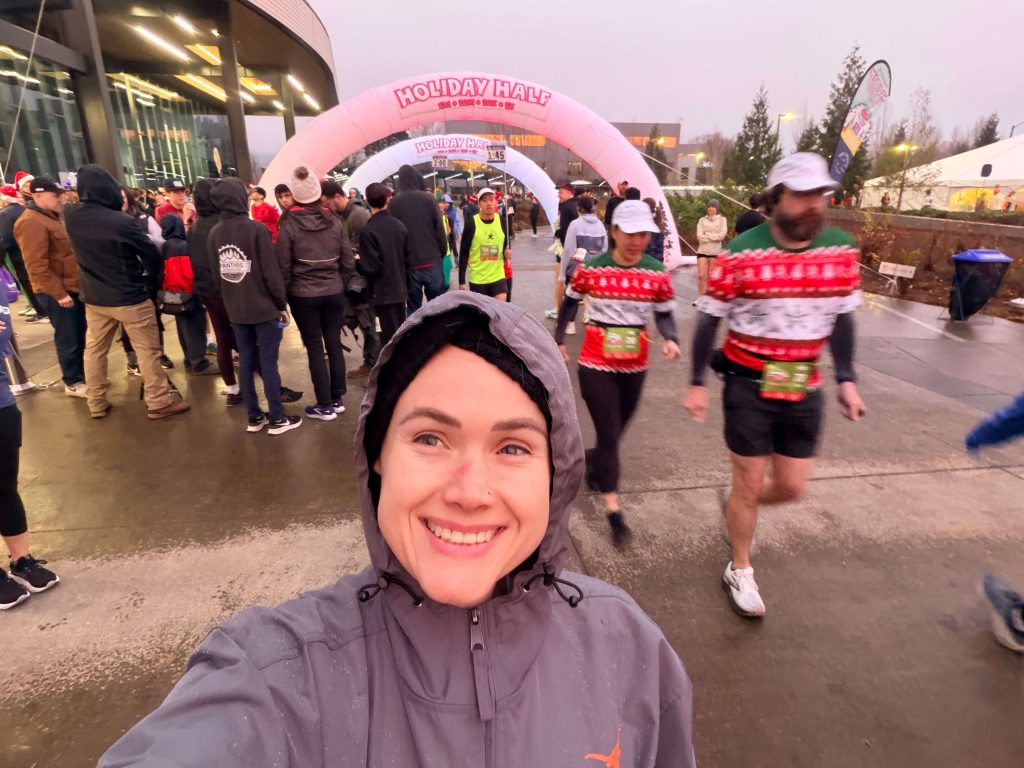
Rain, Hills, and Self-Doubt on Race Morning
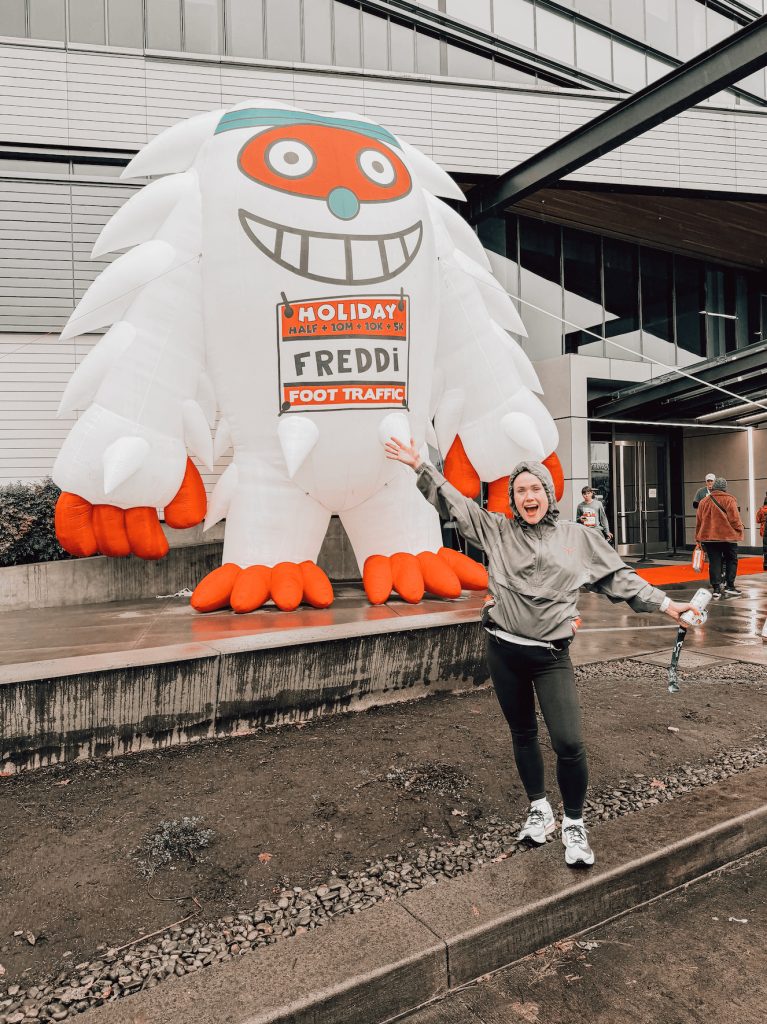
One thing I’ll always give the Foot Traffic Holiday Half credit for: it’s exceptionally well organized.
Yes, traffic is heavy—but parking is smooth, clearly directed, and efficient. When everything else feels uncertain, that kind of structure matters. I always manage to park close enough that the walk to the start line feels manageable, even when my nervous system is anything but.
I arrived about thirty minutes early and stayed in my car as long as possible. It was cold. It was wet. And I didn’t feel like standing outside alone any longer than necessary.
I remembered the course from last year—the hills, the way they sneak up on you and then refuse to let go.
And somehow, they still surprised me.
Those hills do not care if you’re having a hard season. They don’t soften out of compassion. Mid-race, I was texting my running coach straight from my watch:
I hate these hills. Please make it stop.
Some traditions never change.

Beating My Time as a Post-Bariatric Runner
And then came the part that still doesn’t quite feel real.
I beat my time on this exact course from last year by seven minutes.
Seven.
Minutes.
My average pace hovered in the low ten-minute range, with several miles dipping into the eights and nines—something I’ve never done on a course this hilly. Mile six, the long downhill stretch on the way back, felt like a gift I hadn’t earned but desperately needed. That final split nearly broke me open.
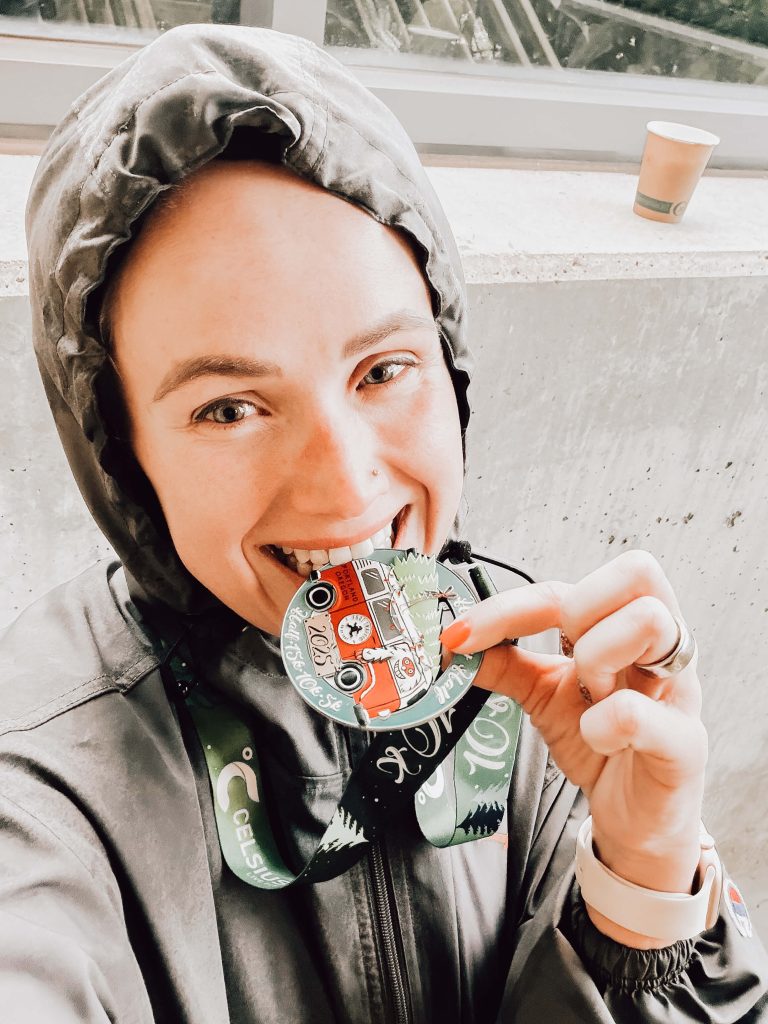
I crossed the finish line of the 10K in 1 hour and 5 minutes, and for the first time in a while, my body and my mind landed in the same place.
Pride.
This bariatric runner race recap reminds me that progress doesn’t disappear just because training—or life—gets messy.
The Little Things: What Worked and What Didn’t
Because no race recap is complete without honesty:
The aid tables felt a little underwhelming this year.
On-course entertainment was lighter than I remember—fewer cookies, fewer carolers, fewer distractions from the cold and the miles.
Yes, it was miserable weather.
But we were all cold.
We were all wet.
We were all running far—and paying to be there.
Still, the event delivered exactly what I needed. It was familiar. Reliable. Steady enough to let me turn inward and stay there.
Shoe Talk: First Run in Nike Zoom Flys
This race was also my first real test in Nike Zoom Flys, a deliberate experiment to see whether carbon-plated shoes might have a place in my future—especially with Disneyland on the horizon.
Short answer?
I’m leaning heavily toward yes.
I’ll share a full carbon-plated shoes review for bariatric runners soon, but this race made one thing clear: these shoes may be part of my next chapter—not because they make me faster, but because they help me stay strong when fatigue sets in.
What This Race Meant for My Bariatric Running Journey
After the race, I went home, warmed up, and spent the rest of the day with my family. And somewhere between the soreness and the stillness, it landed.
This race gave me exactly what I needed.
Not validation.
Not proof.
A reminder.
I showed up when it would have been easier to leave.
I stayed when no one would have blamed me for quitting.
I proved—again—that progress doesn’t disappear just because life gets heavy.
This wasn’t just a race.
It was a reminder that I am still here.
Still capable.
Still moving forward—even on the days when everything feels harder than it should.
And I needed that win more than I realized.
This bariatric runner race recap will always matter to me—not for the time on the clock, but for the moment I chose myself.
💛
— Bariatric Runner Mom
Pin this post for later if you’re running after weight loss surgery or navigating mental health while training.