Dance competition weekends look fun from the outside. Matching jackets. Stage lights. Applause.
From the inside? They’re physically draining, emotionally charged, and wildly under-recovered.
By Sunday night, most dance moms aren’t just tired… they’re depleted. And Monday doesn’t care.
The Hidden Cost of Competition Weekends
Competition weekends demand: • Early mornings and late nights • Hours of sitting, standing, and walking • Missed meals or rushed fueling • Emotional regulation—for kids and yourself
For moms who are runners or post-op bariatric patients, these weekends can throw off energy for days.
The problem isn’t the competition. It’s the lack of recovery afterward.
Why Recovery Matters More Than You Think
Recovery isn’t just for athletes on stage. Moms are performing too—logistically, emotionally, physically.
Without intentional recovery: • Fatigue compounds into the week • Training feels harder than it should • Mood dips show up unexpectedly • Burnout creeps in quietly
How Dance Moms Can Recover Faster After Competitions
Recovery doesn’t need to be elaborate. It needs to be intentional.
Helpful strategies: • Eat a real meal Sunday night, even if it’s simple • Hydrate aggressively the day after—not just during the weekend • Schedule a low-energy Monday evening • Skip intense workouts for 24–48 hours if needed • Go to bed earlier instead of “resetting” the house
Recovery isn’t quitting. It’s refueling.
You Don’t Need to “Push Through”
Pushing through exhaustion doesn’t make you stronger. It just delays recovery.
Dance moms who recover well don’t lose momentum—they protect it.
Takeaway
Competition weekends take more than time. They take energy. Treat recovery as part of the event, not an afterthought, and your body—and mindset—will thank you.
There’s a specific kind of tired that comes with being a dance mom. It’s not just physical. It’s logistical. Emotional. Mental.
It’s the tired that hits after you’ve packed the bag, driven the route, sat through practice, answered emails, managed snacks, and then still had to show up as yourself for the rest of the day. If you’re a mom who also trains, works, or is rebuilding energy after major weight loss, that exhaustion can feel amplified.
And yet, most dance moms keep going.
Not because they’re superhuman. But because they’ve learned how to manage exhaustion instead of fighting it.
Why Dance Mom Exhaustion Is So Real
Dance schedules don’t respect normal rhythms. They stretch evenings, consume weekends, and demand emotional presence on top of logistics.
For many moms, especially those navigating life after bariatric surgery, exhaustion isn’t just about time—it’s about energy management. Lower tolerance for missed meals. Less margin for poor sleep. Faster emotional depletion.
Burnout doesn’t come from being busy. It comes from being busy without recovery.
What Managing Exhaustion Actually Looks Like
Managing exhaustion doesn’t mean doing less dance. It means doing life differently around it.
Here’s what actually helps:
• Lowering expectations on non-essential tasks during heavy dance weeks • Building predictable routines around practice days • Planning recovery the same way you plan commitments • Letting “good enough” replace perfection
Burnout happens when everything is treated as equally urgent. Dance moms who last learn to prioritize energy, not just time.
The Role of Recovery (Yes, Moms Need It Too)
Recovery isn’t indulgent. It’s necessary.
For moms who are also runners or rebuilding strength post-surgery, recovery includes: • Eating consistently (even when busy) • Hydrating earlier in the day, not just at night • Creating mental decompression time after practices • Sleeping more on non-practice nights instead of “catching up” on chores
You wouldn’t train through exhaustion forever. Parenting seasons deserve the same respect.
Burnout Isn’t a Personal Failure
If you’re tired, you’re not weak. You’re responding to sustained demand.
The goal isn’t to eliminate exhaustion—it’s to prevent it from turning into burnout. That happens when rest becomes optional instead of planned.
Dance moms who last don’t push harder. They recover smarter.
Takeaway
Exhaustion is part of dance mom life. Burnout doesn’t have to be. Managing energy, honoring recovery, and letting seasons ebb and flow is how moms stay in it for the long haul.
Running after bariatric surgery is often framed as a cardiovascular goal: logging miles, improving endurance, and building consistency. But for bariatric runners who want longevity, injury prevention, and confidence, strength training is not optional.
It’s foundational.
Why Running Alone Isn’t Enough After Bariatric Surgery
Running is a repetitive, high-impact activity. While it improves aerobic fitness, it does not fully support joint stability, muscle balance, or long-term durability — especially in bodies that have experienced rapid weight change.
After bariatric surgery, runners often experience:
shifts in joint alignment
muscle mass loss during weight reduction
increased recovery demands
greater need for structural support
Strength training fills the gaps that running leaves behind.
What Strength Training Does for Bariatric Runners
Strength training for runners after bariatric surgery helps:
stabilize hips, knees, and ankles
improve impact absorption
reduce overuse injury risk
improve running efficiency
protect lean muscle mass
This isn’t about aesthetics or bodybuilding. It’s about building a body that can handle running long-term.
How Much Strength Training Do Runners Need?
You don’t need a complicated program.
Most bariatric runners benefit from:
2 full-body strength sessions per week
20–40 minutes per session
compound movements over isolation
Focus areas:
glutes and hamstrings
quads and calves
core stability
upper-back strength
Consistency matters more than intensity.
Strength Training Is How Runners Keep Running
Most runners don’t stop because they lose motivation. They stop because their bodies can’t tolerate the stress anymore.
Strength training is what keeps runners in the game, especially after bariatric surgery.
If you love runDisney, costumes, themed medals, and races that feel more like a vacation than a competition, you’re not alone. The best fun destination races in the United States combine high-energy crowds, iconic locations, and unforgettable experiences that go far beyond the finish line. From music-filled city races to pirate-themed waterfront runs and dessert-centered celebrations, these events are perfect for runners who want joy, travel, and community baked into their race weekend. Whether you’re planning your next half-marathon getaway or building a race bucket list, these Run-Disney-level races deliver big fun in incredible locations.
🏰 runDisney (FL & CA)
The gold standard. Costumes encouraged, character stops every mile, fireworks starts, and parks-as-your-race-course magic.
Best for: first destination race, themed miles, full-on joy Vibe: ✨✨✨✨✨ (elite magic)
🎶 Rock ‘n’ Roll Marathon Series (Nationwide)
Live bands on course, iconic cities, big crowds. Vegas at night? Nashville with country music? YES.
Best for: party runners, city lovers Vibe: 🎸🏙️🎉
🎭 Broad Street Run (Philadelphia, PA)
10 miles of nonstop crowd energy, costumes, DJs, and city pride. It’s basically a running block party.
Best for: crowd-powered PRs Vibe: 🔥🔥🔥
🌈 Rocky Mountain Pride Run (Denver, CO)
Joy, inclusivity, costumes, music, and celebration baked into every step.
Best for: community + celebration Vibe: 🌈💃🎉
🎉 Gasparilla Distance Classic (Tampa, FL)
Pirate themes, waterfront views, medals that actually feel special.
Best for: Disney runners branching out Vibe: 🏴☠️☀️🎶
🎡 Flying Pig Marathon (Cincinnati, OH)
Pink everywhere. Pigs everywhere. Unhinged fun in the best way.
Best for: quirky fun + first marathon Vibe: 🐷💗🎉
🎆 Hot Chocolate Run (Multiple Cities)
Massive medals + chocolate fondue at the finish. Dessert is the real headliner.
Best for: social runners, winter races Vibe: 🍫✨☕️
🏖️ Key West Half Marathon (Key West, FL)
Tropical views, laid-back energy, and a very vacation-first mentality.
Best for: race + getaway combo Vibe: 🌴😎🏃♀️
🎒 How to Pick a “Fun Race” (Disney-Level Test)
✔️ Costumes encouraged ✔️ Spectator energy ✔️ Themed medals ✔️ Built-in travel experience ✔️ Finish-line party > finish-line exhaustion
Whether you’re chasing themed medals, electric crowd energy, or a race weekend that feels more like a vacation, these fun destination races in the United States prove that running can be just as joyful as it is challenging. From Run-Disney-level experiences to music-filled city races and wildly creative themed events, there’s no shortage of unforgettable races worth traveling for. If you’re ready to turn your next race into a full experience—costumes, sightseeing, celebration, and all—start building your bucket list and choose the destination race that matches your vibe, goals, and sense of fun.
Carbon plated running shoes are everywhere right now. They’re fast. They’re expensive. And they’re often marketed as a shortcut to better race times.
But if you’re a bariatric runner, the question isn’t “Are carbon plated shoes fast?” It’s “Are carbon plated shoes supportive, safe, and actually helpful for my body?”
This is my honest carbon plated shoes review for bariatric runners—from the perspective of someone running after weight loss surgery, rebuilding strength, and prioritizing longevity over hype.
What Are Carbon Plated Running Shoes?
Carbon plated shoes include a rigid carbon-fiber plate embedded in the midsole. The goal is to:
Improve energy return
Increase propulsion
Reduce fatigue at faster paces
They’re commonly used by elite and competitive runners—but that doesn’t mean bariatric runners can’t benefit from them too.
The key is how and when they’re used.
Why Bariatric Runners Need a Different Conversation About Shoes
Running after gastric sleeve or other bariatric surgery changes how we approach gear.
Bariatric runners often need:
More stability
More cushioning
Better joint protection
Shoes that forgive imperfect form
Carbon plated shoes are not automatically better just because they’re trendy. For bariatric runners, the wrong shoe can increase injury risk instead of performance.
My Experience Testing Carbon Plated Shoes
I didn’t buy carbon plated shoes to chase speed—I bought them to test whether they felt supportive during races, especially longer efforts like 10Ks and half marathons.
What surprised me most wasn’t the speed. It was the efficiency.
What I Noticed Right Away
Smoother toe-off
Less pounding late in the race
A more “guided” stride when fatigued
The plate didn’t make me magically faster—but it helped me hold form longer, which matters more than pace alone.
Pros of Carbon Plated Shoes for Bariatric Runners
1. Reduced Fatigue Over Distance
The plate helps absorb and redirect force, which can reduce how “beat up” legs feel late in a race.
2. Improved Running Economy
For bariatric runners who fatigue earlier, efficiency matters. Carbon plates can help conserve energy.
3. Mental Confidence on Race Day
Race shoes matter psychologically. Feeling supported and intentional about gear boosts confidence—especially on hard days.
Cons (and Cautions) for Bariatric Runners
1. Stability Varies by Model
Some carbon plated shoes are narrow or aggressive. Bariatric runners need stable platforms, not tippy designs.
2. Not Ideal for Everyday Training
These shoes are best saved for race day or key workouts. Daily use can stress calves, ankles, and feet.
3. Adaptation Takes Time
Carbon plates change mechanics slightly. Jumping straight into long runs without adapting can lead to injury.
Cushioning Matters More Than the Plate
Here’s something that doesn’t get said enough:
👉 Cushioning matters more than carbon plating for bariatric runners.
If the shoe doesn’t absorb impact well, the plate won’t save your joints.
Look for:
Thick, responsive foam
A wide base
Rocker-style geometry
Neutral or mild stability designs
The plate should feel like support, not force.
Are Carbon Plated Shoes Worth It for Bariatric Runners?
Short answer: Yes—with conditions.
Carbon plated shoes can be worth it if:
You’re using them for races or long efforts
You’ve built a consistent running base
You prioritize comfort and stability over hype
They are not required to be a runner. They are a tool—not a milestone.
Who Should Wait Before Trying Carbon Plated Shoes?
You may want to wait if:
You’re very early post-op
You’re still building walk-run endurance
You struggle with foot or ankle stability
You haven’t found a reliable daily trainer yet
Carbon plates are an enhancement—not a foundation.
How I Use Carbon Plated Shoes in My Training
Personally, I reserve carbon plated shoes for:
Races
Key long runs
Specific pace workouts
My daily training shoes focus on:
Cushioning
Stability
Comfort over speed
This balance protects my body while still letting me enjoy race-day benefits.
Final Thoughts: Bariatric Runners Deserve Good Gear Too
Carbon plated shoes aren’t just for elite runners.
Bariatric runners deserve:
Shoes that support their goals
Gear that protects their bodies
Honest conversations—not gatekeeping
If carbon plated shoes help you feel stronger, safer, and more confident on race day, they belong in your rotation.
Running isn’t about proving anything. It’s about finding tools that help you keep showing up.
Want More Bariatric Runner Gear Reviews?
I share honest reviews, race recaps, and training reflections for runners navigating life after weight loss surgery—without the hype or pressure.
💛 — Bariatric Runner Mom
Pin this post for later if you’re running after weight loss surgery or navigating mental health while training.
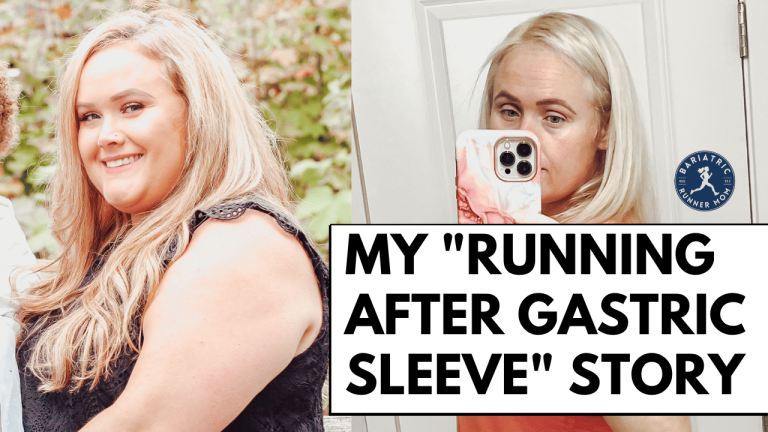
If you had told me a few years ago that running would become part of my life — not just something I tried, but something I built goals, routines, and dreams around — I wouldn’t have believed you.
This is my running after gastric sleeve story.
It’s not a highlight reel. It’s not a dramatic before-and-after. It’s the honest, complicated, emotional journey of learning how to move my body again after weight loss surgery — and learning how to trust myself in the process.
If you’re curious about running after gastric sleeve surgery, unsure if your body is “ready,” or wondering whether you even belong in running spaces, this story is for you.
Life Before Running and Gastric Sleeve Surgery
Before my gastric sleeve surgery, movement felt complicated.
My body carried more weight than it was designed to comfortably handle, and exercise often felt like punishment instead of empowerment. Every attempt at “getting active” came with pain, frustration, and the constant reminder that my body didn’t move the way fitness culture said it should.
Running, especially, felt completely off-limits.
Too hard. Too painful. Too intimidating.
I didn’t see runners who looked like me. I didn’t hear stories that reflected my reality. And over time, it became easier to believe that running was something reserved for “other people.”
Choosing Gastric Sleeve Surgery and Relearning Movement
Gastric sleeve surgery wasn’t about becoming a runner.
It was about health. It was about survival. It was about giving myself a future with more options than I had before.
What I didn’t expect was how movement would slowly change meaning after surgery.
At first, exercise was about rebuilding from the ground up:
Walking without pain
Learning my new energy limits
Understanding fueling, hydration, and recovery
Respecting a body that was healing internally, not just shrinking externally
Running didn’t come immediately — and it shouldn’t. Running after gastric sleeve requires patience, body awareness, and a willingness to let progress look different than you imagined.
How Running After Gastric Sleeve Became Possible
I didn’t wake up one day and decide to “be a runner.”
It started quietly.
Short walks became longer walks. Intervals of jogging slipped in. Rest days became intentional instead of guilt-filled.
I paid close attention to how my body responded after weight loss surgery — what it tolerated, what it needed, and when it needed me to stop.
Running after weight loss surgery isn’t about pushing harder. It’s about listening better.
The Mental Side of Running After VSG Surgery
This is the part people don’t talk about enough.
Running after gastric sleeve surgery is deeply mental.
Some days, my body feels strong and capable. Other days, anxiety, depression, or emotional exhaustion make even getting dressed feel heavy.
Running became the place where I confronted:
Fear of failure
Old narratives about my body
Perfectionism and comparison
The belief that I had to “earn” belonging
Some races, I showed up undertrained. Some mornings, I stood in the rain questioning why I was even there.
And sometimes, simply staying was the win.
Running After Weight Loss Surgery: My First Races
Signing up for races changed everything.
Not because of finish times or personal records — but because of commitment.
Standing on a starting line after gastric sleeve surgery carries weight:
You remember who you used to be
You recognize how far you’ve come
You choose yourself anyway
I learned quickly that running doesn’t require speed.
It requires presence.
Some races humbled me. Some surprised me. All of them taught me something about resilience, patience, and self-trust.
Lessons Learned Running After VSG
If you’re running after gastric sleeve — or thinking about it — here’s what I wish someone had told me sooner:
1. Slow Is Not Failure
Your body is rebuilding from the inside out. Respect that process.
2. Fueling Matters More Than You Think
Hydration, electrolytes, and nutrition are non-negotiable when running post-op.
3. Mental Health Affects Training
Hard seasons will show up in your running — and that doesn’t mean you’re doing it wrong.
4. You Don’t Need Permission to Call Yourself a Runner
If you run — even a little — you belong.
Why I Created Bariatric Runner Mom
I couldn’t find enough stories about running after gastric sleeve that felt honest.
So I decided to tell mine.
Bariatric Runner Mom exists for runners who:
Have had gastric sleeve or weight loss surgery
Are rebuilding trust with their bodies
Want goals without pressure
Need honesty instead of hype
This space is about showing up on hard days, celebrating small wins, and redefining what strength looks like after bariatric surgery.
What Running After Gastric Sleeve Looks Like for Me Now
I’m still evolving.
Some seasons I chase races. Some seasons I chase consistency. Some seasons, running is quiet and internal.
But every step I take now is one I never thought I’d be able to take before.
And that matters.
If This Is Your Running After Gastric Sleeve Story Too
If you’re at the beginning — welcome. If you’re in the messy middle — you’re not behind. If you’re questioning whether you belong — yes, you do.
Running after gastric sleeve isn’t about proving anything.
It’s about reclaiming:
Your body
Your voice
Your belief in yourself
And for me, that’s the real finish line.
Want More Support?
If you’re navigating running after weight loss surgery, mental health, or starting over in your body, I share:
Beginner-friendly race guides
Honest race recaps
Training reflections
Encouragement for showing up anyway
💛 You’re not alone here.
— Bariatric Runner Mom
Pin this post for later if you’re running after gastric sleeve or navigating mental health while training.
For a long time, I thought training was supposed to look the same no matter what was happening in my life. Follow the plan. Hit the miles. Push through.
But the longer I’ve been a runner—and the more honest I’ve become with myself—the clearer it is that mental health directly impacts my training. Not occasionally. Not dramatically. Every single day.
This post isn’t about excuses or quitting. It’s about reality, compassion, and learning how to train with my mental health instead of constantly fighting it.
Mental Health Is Part of Training (Whether We Admit It or Not)
We talk a lot about physical readiness in running:
Mileage
Pace
Strength
Recovery
But mental readiness often gets ignored—especially in endurance sports.
Anxiety, depression, burnout, stress, and emotional overload don’t stay neatly separated from training. They show up in motivation, sleep, energy levels, focus, and even how the body responds to effort.
For me, training and mental health are inseparable.
What Training Looks Like on Good Mental Health Days
On days when my mental health is steady, training feels lighter—even when it’s hard.
These are the days people usually see—and assume they’re the norm.
They’re not.
What Training Looks Like When Mental Health Is Struggling
When my mental health dips, training changes—sometimes dramatically.
On those days:
Motivation disappears
Sleep is disrupted
Anxiety amplifies physical discomfort
Easy runs feel hard for no obvious reason
I’ve had days where putting on my shoes felt heavier than the run itself.
And here’s the important part: that doesn’t mean I’m weak or undisciplined. It means my nervous system is overloaded.
Mental health struggles don’t make training impossible—but they do make it different.
Anxiety, Depression, and the Nervous System
One of the biggest lessons I’ve learned is that training is deeply connected to the nervous system.
When anxiety is high:
Heart rate spikes faster
Breathing feels shallow
Effort feels harder than it should
When depression is present:
Energy is lower
Movement feels heavier
Recovery takes longer
These are physiological responses, not mindset failures.
Understanding this helped me stop shaming myself for “bad runs” and start responding with adjustment instead.
How I Adapt My Training for Mental Health
Instead of forcing consistency at all costs, I’ve learned to adapt.
1. I Redefine “Success”
Some days, success is finishing a workout. Other days, success is starting—and stopping early. And sometimes, success is resting without guilt.
2. I Loosen My Grip on the Plan
Plans are tools, not contracts. Mental health fluctuations require flexibility, not punishment.
3. I Choose Movement Over Metrics
On hard mental health days, I focus on:
Time outside
Gentle movement
Breathing
Being present
Not pace. Not distance. Not numbers.
4. I Stop Interpreting Everything as Regression
A hard week mentally does not erase months of physical progress. Training adaptations don’t disappear overnight.
Running Helps My Mental Health—But It’s Not a Cure
Running supports my mental health. It does not replace therapy, medication, rest, or boundaries.
Movement can:
Regulate emotions
Reduce anxiety
Provide routine
Offer perspective
But running cannot—and should not—carry the full responsibility of mental health care.
Sometimes the healthiest training decision is stepping back, not pushing forward.
The Pressure to “Be Strong” in Running Culture
There’s a quiet expectation in running culture to be resilient at all costs. To power through. To toughen up.
That mindset can be dangerous.
Ignoring mental health in training doesn’t make you stronger—it makes burnout more likely. Sustainable training requires emotional honesty, not constant toughness.
Strength looks different in different seasons.
What I Want Other Runners to Know
If your mental health impacts your training, you are not failing.
You are human.
Your worth as a runner is not measured by:
Perfect weeks
Unbroken streaks
Constant motivation
It’s measured by your willingness to listen, adapt, and keep showing up in ways that honor your whole self—not just your physical body.
Why I Talk About This Openly
I talk about mental health and training because I wish I had seen more of it when I started.
More honesty. More nuance. Less pressure to pretend everything is fine.
Training doesn’t happen in a vacuum. Life shows up on the run with us—every time.
And learning how to run with mental health, instead of against it, has been one of the most important parts of my journey.
If you’re interested in learning more about Still I Run, the community exists to remind runners that they’re never alone, head here to become part of the community.
If This Sounds Like Your Experience Too
You’re not behind. You’re not broken. You’re not doing it wrong.
You’re training in a real body, with a real brain, in a real life.
And that counts.
💛 — Bariatric Runner Mom
Pin this post for later if you’re running after weight loss surgery or navigating mental health while training.