Author: myrandamcdonald

  • Running After Gastric Sleeve: My Honest Story of Rebuilding Trust With My Body

    Running After Gastric Sleeve: My Honest Story of Rebuilding Trust With My Body

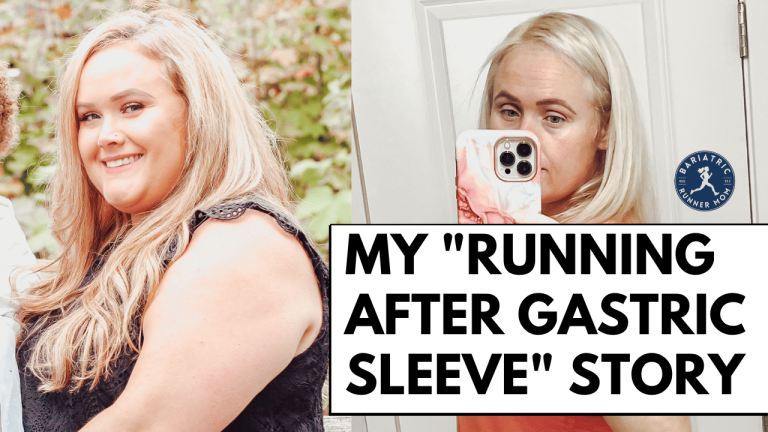
    If you had told me a few years ago that running would become part of my life — not just something I tried, but something I built goals, routines, and dreams around — I wouldn’t have believed you.

    This is my running after gastric sleeve story.

    It’s not a highlight reel.
    It’s not a dramatic before-and-after.
    It’s the honest, complicated, emotional journey of learning how to move my body again after weight loss surgery — and learning how to trust myself in the process.

    If you’re curious about running after gastric sleeve surgery, unsure if your body is “ready,” or wondering whether you even belong in running spaces, this story is for you.


    Life Before Running and Gastric Sleeve Surgery

    Before my gastric sleeve surgery, movement felt complicated.

    My body carried more weight than it was designed to comfortably handle, and exercise often felt like punishment instead of empowerment. Every attempt at “getting active” came with pain, frustration, and the constant reminder that my body didn’t move the way fitness culture said it should.

    Running, especially, felt completely off-limits.

    Too hard.
    Too painful.
    Too intimidating.

    I didn’t see runners who looked like me.
    I didn’t hear stories that reflected my reality.
    And over time, it became easier to believe that running was something reserved for “other people.”


    Choosing Gastric Sleeve Surgery and Relearning Movement

    Gastric sleeve surgery wasn’t about becoming a runner.

    It was about health.
    It was about survival.
    It was about giving myself a future with more options than I had before.

    What I didn’t expect was how movement would slowly change meaning after surgery.

    At first, exercise was about rebuilding from the ground up:

    • Walking without pain
    • Learning my new energy limits
    • Understanding fueling, hydration, and recovery
    • Respecting a body that was healing internally, not just shrinking externally

    Running didn’t come immediately — and it shouldn’t.
    Running after gastric sleeve requires patience, body awareness, and a willingness to let progress look different than you imagined.


    How Running After Gastric Sleeve Became Possible

    I didn’t wake up one day and decide to “be a runner.”

    It started quietly.

    Short walks became longer walks.
    Intervals of jogging slipped in.
    Rest days became intentional instead of guilt-filled.

    I paid close attention to how my body responded after weight loss surgery — what it tolerated, what it needed, and when it needed me to stop.

    Running after weight loss surgery isn’t about pushing harder.
    It’s about listening better.


    The Mental Side of Running After VSG Surgery

    This is the part people don’t talk about enough.

    Running after gastric sleeve surgery is deeply mental.

    Some days, my body feels strong and capable.
    Other days, anxiety, depression, or emotional exhaustion make even getting dressed feel heavy.

    Running became the place where I confronted:

    • Fear of failure
    • Old narratives about my body
    • Perfectionism and comparison
    • The belief that I had to “earn” belonging

    Some races, I showed up undertrained.
    Some mornings, I stood in the rain questioning why I was even there.

    And sometimes, simply staying was the win.


    Running After Weight Loss Surgery: My First Races

    Signing up for races changed everything.

    Not because of finish times or personal records — but because of commitment.

    Standing on a starting line after gastric sleeve surgery carries weight:

    • You remember who you used to be
    • You recognize how far you’ve come
    • You choose yourself anyway

    I learned quickly that running doesn’t require speed.

    It requires presence.

    Some races humbled me.
    Some surprised me.
    All of them taught me something about resilience, patience, and self-trust.


    Lessons Learned Running After VSG

    If you’re running after gastric sleeve — or thinking about it — here’s what I wish someone had told me sooner:

    1. Slow Is Not Failure

    Your body is rebuilding from the inside out. Respect that process.

    2. Fueling Matters More Than You Think

    Hydration, electrolytes, and nutrition are non-negotiable when running post-op.

    3. Mental Health Affects Training

    Hard seasons will show up in your running — and that doesn’t mean you’re doing it wrong.

    4. You Don’t Need Permission to Call Yourself a Runner

    If you run — even a little — you belong.


    Why I Created Bariatric Runner Mom

    I couldn’t find enough stories about running after gastric sleeve that felt honest.

    So I decided to tell mine.

    Bariatric Runner Mom exists for runners who:

    • Have had gastric sleeve or weight loss surgery
    • Are rebuilding trust with their bodies
    • Want goals without pressure
    • Need honesty instead of hype

    This space is about showing up on hard days, celebrating small wins, and redefining what strength looks like after bariatric surgery.


    What Running After Gastric Sleeve Looks Like for Me Now

    I’m still evolving.

    Some seasons I chase races.
    Some seasons I chase consistency.
    Some seasons, running is quiet and internal.

    But every step I take now is one I never thought I’d be able to take before.

    And that matters.


    If This Is Your Running After Gastric Sleeve Story Too

    If you’re at the beginning — welcome.
    If you’re in the messy middle — you’re not behind.
    If you’re questioning whether you belong — yes, you do.

    Running after gastric sleeve isn’t about proving anything.

    It’s about reclaiming:

    • Your body
    • Your voice
    • Your belief in yourself

    And for me, that’s the real finish line.


    Want More Support?

    If you’re navigating running after weight loss surgery, mental health, or starting over in your body, I share:

    • Beginner-friendly race guides
    • Honest race recaps
    • Training reflections
    • Encouragement for showing up anyway

    💛 You’re not alone here.

    — Bariatric Runner Mom

    Pin this post for later if you’re running after gastric sleeve or navigating mental health while training.

  • How Mental Health Impacts My half-marathon Training as a bariatric patient

    How Mental Health Impacts My half-marathon Training as a bariatric patient

    For a long time, I thought training was supposed to look the same no matter what was happening in my life. Follow the plan. Hit the miles. Push through.

    But the longer I’ve been a runner—and the more honest I’ve become with myself—the clearer it is that mental health directly impacts my training. Not occasionally. Not dramatically. Every single day.

    This post isn’t about excuses or quitting. It’s about reality, compassion, and learning how to train with my mental health instead of constantly fighting it.

    Mental Health Is Part of Training (Whether We Admit It or Not)

    We talk a lot about physical readiness in running:

    • Mileage
    • Pace
    • Strength
    • Recovery

    But mental readiness often gets ignored—especially in endurance sports.

    Anxiety, depression, burnout, stress, and emotional overload don’t stay neatly separated from training. They show up in motivation, sleep, energy levels, focus, and even how the body responds to effort.

    For me, training and mental health are inseparable.


    What Training Looks Like on Good Mental Health Days

    On days when my mental health is steady, training feels lighter—even when it’s hard.

    I can:

    • Follow a plan without obsessing over it
    • Trust my body’s cues
    • Recover more effectively
    • Show up with curiosity instead of pressure

    Effort feels proportional. Fatigue feels earned. Progress feels possible.

    These are the days people usually see—and assume they’re the norm.

    They’re not.


    What Training Looks Like When Mental Health Is Struggling

    When my mental health dips, training changes—sometimes dramatically.

    On those days:

    • Motivation disappears
    • Sleep is disrupted
    • Anxiety amplifies physical discomfort
    • Easy runs feel hard for no obvious reason

    I’ve had days where putting on my shoes felt heavier than the run itself.

    And here’s the important part: that doesn’t mean I’m weak or undisciplined. It means my nervous system is overloaded.

    Mental health struggles don’t make training impossible—but they do make it different.


    Anxiety, Depression, and the Nervous System

    One of the biggest lessons I’ve learned is that training is deeply connected to the nervous system.

    When anxiety is high:

    • Heart rate spikes faster
    • Breathing feels shallow
    • Effort feels harder than it should

    When depression is present:

    • Energy is lower
    • Movement feels heavier
    • Recovery takes longer

    These are physiological responses, not mindset failures.

    Understanding this helped me stop shaming myself for “bad runs” and start responding with adjustment instead.


    How I Adapt My Training for Mental Health

    Instead of forcing consistency at all costs, I’ve learned to adapt.

    1. I Redefine “Success”

    Some days, success is finishing a workout.
    Other days, success is starting—and stopping early.
    And sometimes, success is resting without guilt.

    2. I Loosen My Grip on the Plan

    Plans are tools, not contracts. Mental health fluctuations require flexibility, not punishment.

    3. I Choose Movement Over Metrics

    On hard mental health days, I focus on:

    • Time outside
    • Gentle movement
    • Breathing
    • Being present

    Not pace. Not distance. Not numbers.

    4. I Stop Interpreting Everything as Regression

    A hard week mentally does not erase months of physical progress. Training adaptations don’t disappear overnight.


    Running Helps My Mental Health—But It’s Not a Cure

    Running supports my mental health. It does not replace therapy, medication, rest, or boundaries.

    Movement can:

    • Regulate emotions
    • Reduce anxiety
    • Provide routine
    • Offer perspective

    But running cannot—and should not—carry the full responsibility of mental health care.

    Sometimes the healthiest training decision is stepping back, not pushing forward.


    The Pressure to “Be Strong” in Running Culture

    There’s a quiet expectation in running culture to be resilient at all costs. To power through. To toughen up.

    That mindset can be dangerous.

    Ignoring mental health in training doesn’t make you stronger—it makes burnout more likely. Sustainable training requires emotional honesty, not constant toughness.

    Strength looks different in different seasons.


    What I Want Other Runners to Know

    If your mental health impacts your training, you are not failing.

    You are human.

    Your worth as a runner is not measured by:

    • Perfect weeks
    • Unbroken streaks
    • Constant motivation

    It’s measured by your willingness to listen, adapt, and keep showing up in ways that honor your whole self—not just your physical body.


    Why I Talk About This Openly

    I talk about mental health and training because I wish I had seen more of it when I started.

    More honesty.
    More nuance.
    Less pressure to pretend everything is fine.

    Training doesn’t happen in a vacuum. Life shows up on the run with us—every time.

    And learning how to run with mental health, instead of against it, has been one of the most important parts of my journey.

    If you’re interested in learning more about Still I Run, the community exists to remind runners that they’re never alone, head here to become part of the community.


    If This Sounds Like Your Experience Too

    You’re not behind.
    You’re not broken.
    You’re not doing it wrong.

    You’re training in a real body, with a real brain, in a real life.

    And that counts.

    💛
    — Bariatric Runner Mom

    Pin this post for later if you’re running after weight loss surgery or navigating mental health while training.

  • bariatric runner race recap: holiday half by foot traffic | Portland, Oregon

    bariatric runner race recap: holiday half by foot traffic | Portland, Oregon

    I went into the Foot Traffic Holiday Half race feeling tremendously under-trained. Not in the physical sense—I had done the miles—but in the emotional and mental sense. The kind of under-trained that comes from carrying heavy personal stuff and trying to keep moving anyway.

    Still, I got up early. Around 6 a.m. The small mercy of the day was that my wave didn’t start until 8:04, which meant no early morning, brutal alarm. Anyone who’s raced before knows that traffic can make or break your morning, so I headed out toward Swan Island early, fully expecting the usual pile-up of cars.

    I was nervous. I was excited. I was unsure.
    And I showed up anyway.

    IPrefer video? Check out my Foot Traffic Holiday Half race recap on YouTube.


    Bariatric Runner Race Recap: December 2025 Holiday Half in Portland, Oregon

    Forty-eight hours after the Foot Traffic Holiday Half, when the adrenaline had finally drained and my legs stopped replaying every hill in quiet protest, one truth settled in—slowly, gently, and without drama.

    This bariatric runner race recap isn’t about pace or placement. It’s about showing up undertrained, on a hard mental health day, and choosing to stay anyway.

    I had already won.

    Not because of pace.
    Not because of time.
    Not because of results.

    I won the moment I turned off my car, sat there with my hands on the steering wheel, and said out loud, I’m staying. I will finish this race.

    That decision mattered more than anything that happened after.

    Leading into this race, I was carrying more than physical fatigue. Mentally, emotionally, personally—I was running on fumes. The kind of exhaustion that doesn’t show up on a training plan but lives in your chest, your breath, the way your shoulders tense without permission.

    Standing on that starting line as a bariatric runner took everything I had.

    And before splits or finish times even matter, it needs to be said plainly:

    Nothing about this race required me to be there.
    No one would have questioned it if I’d left.
    No one would have blamed me for choosing comfort instead.

    But I didn’t.

    I stayed.

    And that choice counts.


    Running After Gastric Sleeve on a Hard Mental Health Day

    If you’ve ever raced in Oregon, you already know the atmosphere. Endless gray. Rain that doesn’t fall dramatically—it just exists, soaking everything slowly and completely. I’ve written more honestly about how anxiety and depression affect my training in How Mental Health Impacts My Training, because race day doesn’t exist in a vacuum.

    We’d been under flood watches all week. I checked the forecast obsessively, bargaining with it like it might listen. Saturday teased me with hope. Sunday erased it.

    When I stepped out of the parking garage, the rain met me immediately. Cold. Steady. Unforgiving.

    And I was alone.

    My best running friend had food poisoning and couldn’t make it, which meant there was no familiar voice beside me—no shared nerves, no quiet reassurance. Just rain, wet pavement, and the low hum of race-morning chaos.

    That’s when the thought crept in:

    You don’t have to do this.
    You can go home.
    No one will know.

    It sounded reasonable. Compassionate, even. Almost like self-care.

    And for a moment, it nearly won.

    But I remembered why I signed up. I remembered how many times I’ve shortened myself when things got hard—how often I’ve stepped away early, not because I couldn’t finish, but because finishing felt emotionally expensive.

    Standing there, soaked and tired, I made a different choice.

    Not today.

    So I stayed.


    Rain, Hills, and Self-Doubt on Race Morning

    One thing I’ll always give the Foot Traffic Holiday Half credit for: it’s exceptionally well organized.

    Yes, traffic is heavy—but parking is smooth, clearly directed, and efficient. When everything else feels uncertain, that kind of structure matters. I always manage to park close enough that the walk to the start line feels manageable, even when my nervous system is anything but.

    I arrived about thirty minutes early and stayed in my car as long as possible. It was cold. It was wet. And I didn’t feel like standing outside alone any longer than necessary.

    I remembered the course from last year—the hills, the way they sneak up on you and then refuse to let go.

    And somehow, they still surprised me.

    Those hills do not care if you’re having a hard season. They don’t soften out of compassion. Mid-race, I was texting my running coach straight from my watch:

    I hate these hills. Please make it stop.

    Some traditions never change.


    Beating My Time as a Post-Bariatric Runner

    And then came the part that still doesn’t quite feel real.

    I beat my time on this exact course from last year by seven minutes.

    Seven.

    Minutes.

    My average pace hovered in the low ten-minute range, with several miles dipping into the eights and nines—something I’ve never done on a course this hilly. Mile six, the long downhill stretch on the way back, felt like a gift I hadn’t earned but desperately needed. That final split nearly broke me open.

    I crossed the finish line of the 10K in 1 hour and 5 minutes, and for the first time in a while, my body and my mind landed in the same place.

    Pride.

    This bariatric runner race recap reminds me that progress doesn’t disappear just because training—or life—gets messy.


    The Little Things: What Worked and What Didn’t

    Because no race recap is complete without honesty:

    The aid tables felt a little underwhelming this year.
    On-course entertainment was lighter than I remember—fewer cookies, fewer carolers, fewer distractions from the cold and the miles.

    Yes, it was miserable weather.
    But we were all cold.
    We were all wet.
    We were all running far—and paying to be there.

    Still, the event delivered exactly what I needed. It was familiar. Reliable. Steady enough to let me turn inward and stay there.


    Shoe Talk: First Run in Nike Zoom Flys

    This race was also my first real test in Nike Zoom Flys, a deliberate experiment to see whether carbon-plated shoes might have a place in my future—especially with Disneyland on the horizon.

    Short answer?

    I’m leaning heavily toward yes.

    I’ll share a full carbon-plated shoes review for bariatric runners soon, but this race made one thing clear: these shoes may be part of my next chapter—not because they make me faster, but because they help me stay strong when fatigue sets in.


    What This Race Meant for My Bariatric Running Journey

    After the race, I went home, warmed up, and spent the rest of the day with my family. And somewhere between the soreness and the stillness, it landed.

    This race gave me exactly what I needed.

    Not validation.
    Not proof.
    A reminder.

    I showed up when it would have been easier to leave.
    I stayed when no one would have blamed me for quitting.
    I proved—again—that progress doesn’t disappear just because life gets heavy.

    This wasn’t just a race.

    It was a reminder that I am still here.
    Still capable.
    Still moving forward—even on the days when everything feels harder than it should.

    And I needed that win more than I realized.

    This bariatric runner race recap will always matter to me—not for the time on the clock, but for the moment I chose myself.

    💛
    — Bariatric Runner Mom

    Pin this post for later if you’re running after weight loss surgery or navigating mental health while training.